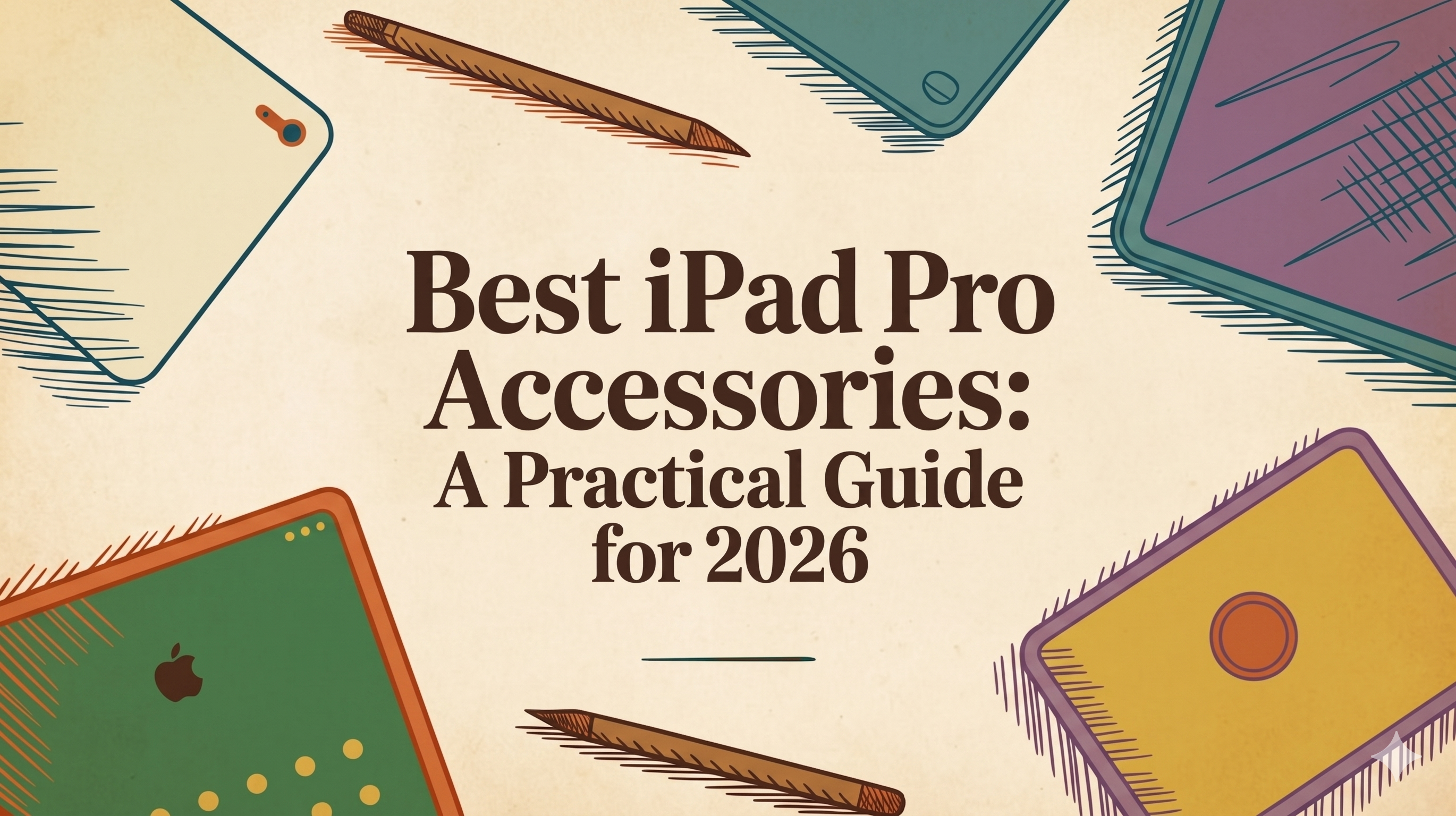
Du packar upp iPad Pro, tar bort skyddsfilmen och spenderar tjugo minuter på att göra det alla gör — testar Pencil-hover, öppnar Procreate, bläddrar bland bakgrundsalternativ. Sedan försöker du faktiskt använda den till något. Skriva ett långt mejl. Ta anteckningar på ett möte. Skissa på en idé medan surfplattan står lutad mot en kaffemugg.
Det är oftast då folk börjar googla bästa ipad pro-tillbehör, och det är också där de flesta tillbehörslistor fallerar. De slänger in ett ställ, ett fodral, en hubb, ett tangentbord och några hörlurar i en lista och kallar det en guide. Men en tredjeårsstuderande sjuksköterska som tar föreläsningsanteckningar behöver inte samma uppsättning som någon som illustrerar i Procreate åtta timmar om dagen, och ingen av dem behöver vad en fjärr-PM som växlar mellan Slack och Zoom behöver. Tillbehör är inte en inköpslista. De är en verktygslåda du bygger kring hur din vecka faktiskt ser ut.
Lås upp din iPad Pros verkliga potential
En ny iPad Pro väcker två reaktioner i snabb följd. Först märker du hur absurt kapabel den är. Sedan når du gränserna för att använda en glasskiva till allt.
Det skärmbaserade tangentbordet blir tröttsamt redan vid andra stycket i ett riktigt dokument. Att rita på bara glas känns hal på ett sätt som är svårt att beskriva förrän du har gjort det. Att delta i ett videosamtal med iPaden balanserad mot en mugg fungerar exakt en gång innan det börjar kännas löjligt. Det är då tillbehören slutar vara valfria.
Marknaden speglar det. År 2023 hade iPad-tillbehör vuxit till en kategori värd 2,5 miljarder dollar, drivet av människor som förvandlar sina surfplattor till verktyg för arbete, kreativitet och studier, enligt AppleToolbox:s översikt över tillbehörsmarknaden.
iPad Pro är inte ofullständig. Den är modulär. Du kompletterar den genom att välja de delar som passar din dag.
En fungerande verktygslåda delas vanligtvis in i fyra kategorier:
- Inmatningsverktyg — stylusar, skärmskydd, allt som påverkar skrivande eller skissande
- Tangentbord — för faktisk produktion, inte bara för att se produktiv ut
- Fodral och ställ — skydd, hållning, betraktningsvinkel
- Praktiska tillägg — hubbar, kablar, lagring, de små sakerna som tyst betyder mycket
Om ditt mål är att få iPaden att kännas mer som en riktig produktivitetsmaskin är den här guiden om att förvandla en iPad till en laptop värd att ha öppen i en annan flik medan du läser den här.
Varför tillbehör är mer än bara tillägg
En iPad Pro utan tillbehör är som ett kockkök utan knivar. Den dyra delen finns där. Potentialen finns där. Det faktiska arbetet känns fortfarande klumpigt.

Felet folk gör är att köpa baserat på hype istället för friktion. En stylus är inte en cool penna – det är en precisionslösning. Ett tangentbord gör inte iPaden produktiv; det förändrar hur länge du faktiskt kan arbeta innan dina händer börjar göra ont. Ett stativ finns inte för att hålla upp skärmen – det finns för att fixa nackvinkel och handledsposition så att en timmes arbete känns som en timme, inte tre.
Vad tillbehör faktiskt tillför
De flesta bra tillbehör löser ett av fyra problem:
- Hastighet, när ett tangentbord eller en stylus med genvägar minskar tryckningar och menysökande
- Precision, när anteckningar eller handskrift kräver mer än fingertoppen
- Komfort, när en bättre vinkel eller textur sparar dig 90 minuter av låggradig belastning
- Mångsidighet, när samma iPad måste hantera anteckningar, e-post, design och ett videosamtal klockan 16
De tillbehör som är värda att köpa är inte de flashiga. Det är de som tyst tar bort en flaskhals.
Köp för uppgifter, inte kategorier
Folk börjar med fel fråga. "Vilka tillbehör ska jag skaffa till min iPad Pro?" är för brett för att besvaras.
Det bättre valet: vad gör jag tillräckligt ofta för att min nuvarande uppsättning ska bromsa mig?
Om din vecka består av föreläsningar, PDF:er och handskrivna anteckningar går pengarna till styluskänsla och skärmtextur. Om det mest är e-post, redigeringar och Slack spelar tangentbordskomfort och styrplattans beteende större roll. Om du skissar i timmar i sträck väger ergonomi och känsla i handen tyngre än om ditt fodral ser snyggt ut på unboxing-bilder.
Praktisk regel: Ett tillbehör är värt att köpa bara om det tar bort en frustration du stöter på varje vecka.
En enkel ram:
| Arbetsflödesproblem | Tillbehör som löser det |
|---|---|
| Att skriva på glas känns hal | Matt eller papperstexturerat skärmskydd |
| Långa skrivsessioner känns trånga | Tangentbordsfodral eller externt tangentbord |
| En enda betraktningsvinkel passar aldrig | Justerbart stativ eller fodral med flera vinklar |
| Portarna känns begränsade | USB-C-hubb |
| Handskrivna anteckningar är röriga eller långsamma | Stylus med handflatesavvisning och lutningsstöd |
De starkaste uppsättningarna ser inte imponerande ut. De känns osynliga. Du slutar tänka på tillbehöret eftersom det försvinner in i uppgiften, och iPaden beter sig äntligen som det verktyg du ville ha när du köpte den.
Precisionverktyget: Stylus och skärmupplevelse
En student som markerar föreläsningsbilder, en arkitekt som markerar en planritning och en designer som skissar på koncept gör olika jobb och behöver olika stylus-inställningar. Därför väljs den här delen av din verktygslåda först efter arbetsflöde, inte pris.

Vad premiumstandarden gör rätt
Apple satte ribban eftersom upplevelsen är polerad på sätt som tunga användare snabbt märker. Apple Pencil Pro lägger till klämgenvägar, haptisk feedback, tryckkänslighet och mycket låg latens, vilket är viktigt när du byter penslar, skuggar eller gör små korrigeringar i en ritapp. TechRadars test av Apple Pencil Pro bekräftar detta — det är fortfarande ett av de starkaste alternativen för dem som spenderar mycket tid på illustration, skissande eller handskrift.
Den förfiningen lönar sig mest för konstnärer och andra avancerade användare som gör hundratals penninmatningar under en session. Nackdelen är priset — 129 dollar för en stylus som bara fungerar i ett ekosystem och bara på vissa iPads. Det är den lucka som tredjepartsstylusar tyst har börjat fylla de senaste åren.
Det bästa Apple Pencil-alternativet för avancerade användare
Om din iPad Pro är delvis skissbok och delvis studio är stylusen värd en seriös titt Tinymoose Pencil Pro Ultra. Den har rankats som det bästa alternativet till Apple Pencil av Creative Bloq, Macworld och Cult of Mac, och funktionslistan är nästan en spegelbild av Apples premium-modell: lutningskänslighet, handflatesavvisning, magnetisk fästning, USB-C snabbladdning som når 80 % på 15 minuter, batteritid på över 10 timmar och Bluetooth-gester (en tryckning för att avsluta appar, dubbeltryck för multitasking-vy).
Det som skiljer är Smart Switch — en knapp för att växla mellan iOS och Android, plus kapacitivt stöd för iPhone. Det är något Apples stylus inte kan göra oavsett pris. För konstnärer i Procreate, studenter som jonglerar mellan iPads och Android-telefoner, eller vem som helst som vill ha en stylus för hela sin enhetssamling, är Pencil Pro Ultra valet. För 49,95 dollar är det ungefär en tredjedel av vad Apple tar betalt.
Vad de flesta faktiskt behöver av en stylus
För alla andra är det enklare måste-ha:
- Handflatesavvisning, så att skrivandet känns naturligt
- Stöd för lutning, för skuggning och bekvämare handskrift
- Pålitlig laddning som inte blir ett eget kabelproblem
- Magnetisk fästning så att pennan sitter kvar på iPaden
- Låg nog latens för att handskrift ska hänga med dina tankar
För studenter påverkar dessa grundfunktioner föreläsningsanteckningar mer än avancerade gester någonsin gör. För yrkesverksamma täcker de PDF-annoteringar, signerade dokument och mötesanteckningar. För hobbykonstnärer är de kanske 90 % av det som används under en riktig session.
Här är Tinymoose Pencil Pro 2 det bättre valet. Det är den dagliga versionen i serien — handflatesavvisning, lutningskänslighet, magnetisk fäste, utbytbara spetsar, USB-C-laddning, gestgenvägar och batteriindikator på skärmen när den är ihopparad via Bluetooth. Ingen iPhone- eller Android-kompatibilitet, ingen Smart Switch — bara de funktioner du faktiskt använder under en föreläsning, ett möte eller en lång PDF-annoteringssession, för 39,95 dollar. Om din iPad Pro används i klasser, kundsamtal eller dokumentgranskning är detta oftast rätt verktyg.
Om du befinner dig i det mellanskiktet är denna testade ranking av iPad-stylusar ett användbart sätt att skilja premiumfunktioner från de som verkligen betyder något i vardagen.
Skärmytan förändrar skrivupplevelsen
Många skyller på pennan när det verkliga problemet är glaset.
Bar iPad-glas är skarpt och ljust, men halt. Handskriften blir stressad, särskilt i anteckningsappar där bokstavsformer spelar roll. Långa annoteringssessioner blir tröttsamma eftersom handen hela tiden kompenserar för bristen på friktion.
Ett matt eller papperliknande skydd ändrar känslan mer än köpare förväntar sig. Avvägningen är enkel: bättre kontroll för handskrift och skissande, något mindre skärpa på skärmen och lite mer slitage på spetsen över tid. Värt det för de flesta som tar anteckningar. Värt att tänka på två gånger om du tittar mycket på video på iPad.
Om din handstil blir sämre på iPad, fixa ytan innan du byter stylus.
Spendera mer eller spendera smartare
Det beror på vad som fyller din vecka.
Välj Pencil Pro Ultra om du:
- ritar, målar eller retuscherar bilder regelbundet
- värdesätter gestgenvägar i Procreate eller andra kreativa appar
- växlar mellan iPad, iPhone och Android-enheter
- vill ha en stylus som fungerar på alla dina skärmar
Välj Pencil Pro 2 om du:
- ta anteckningar i klass eller möten
- annotera PDF:er och läsmaterial
- skissa ibland
- värdesätt pålitliga grundfunktioner mer än avancerade extrafunktioner
För arbetsflöden med mycket anteckningar skulle jag lägga en del av budgeten på skärmkänsla innan jag jagar varje avancerad pennfunktion. En stabil mellanklass-stylus på en matt yta känns oftast bättre för handskrift än en toppstylus på hal glas. Det låter kontraintuitivt tills du faktiskt provar.
Produktivitetsmaskinen: Tangentbord för arbete och studier
Den andra tillbehöret som förändrar allt är tangentbordet. Om en stylus gör iPad Pro användbar för idéer, gör ett tangentbord den användbar för produktion.
Folk säger att de vill att deras iPad ska "ersätta en laptop", men det uttrycket döljer två ganska olika mål. Vissa vill ha en full laptoplik setup med pekplatta, styvt tangentbord och stabil betraktningsvinkel vid ett skrivbord. Andra vill ha något lättare — portabilitet för att skriva var som helst utan att förvandla surfplattan till en tung klämkapsel varje gång.

Var Magic Keyboard placeras
Apples Magic Keyboard är referenspunkten för premiumtangentbord till iPad. Saxbrytarmekanism med 1 mm tangentresor, bekväm för skrivhastigheter över 90 ord per minut, och en flytande konsol som ger dig betraktningsvinklar från 90 till 130 grader — vilket ergonomiska studier antyder kan minska nackbelastning vid längre sessioner, enligt denna Magic Keyboard benchmark-video och analys.
Det spelar roll om din iPad Pro spenderar mycket tid på bord, skrivbord, brickbord och köksbänkar och gör verkligt arbete. Pekplattan gör att iPadOS känns mindre som en jättestor telefon och mer som en riktig datorplattform.
Det kostar också 349 dollar för 13-tumsversionen. Det är en del av samtalet som Apples marknadsföring ofta hoppar över.
Avvägningarna är verkliga
Magic Keyboard är imponerande, men det är inte automatiskt rätt för alla.
Det tillför vikt. Det trycker iPaden mot en fast, laptopliknande position som är starkast vid ett skrivbord och minst flexibel i en trång stol eller vid en köksbänk. Det drar ström från iPaden via Smart Connector, så bakgrundsbelysta tangenter påverkar batteritiden. Och om du ständigt växlar mellan att rita och skriva kan ett styvt fast tangentbord kännas mindre flexibelt än det först verkar — varje övergång blir ett litet projekt.
Så "bäst" beror verkligen på hur mobilt ditt arbete faktiskt är — och hur mycket du är villig att betala för en Apple-logga.
Alternativet SpacePad
Tangentbordet som de flesta Tinymoose-kunder väljer är SpacePad, och det finns i två versioner som löser de två olika problemen ovan.
SpacePad är ett komplett tangentbordsskal — det täcker både fram- och baksida, inkluderar en 3-vägs multitouch-pekskärm, RGB-bakgrundsbelysta tangenter med sju färgalternativ, saxbrytartangentbord och justerbara betraktningsvinklar. Upp till 200 timmars batteritid på sin egen interna cell, så det drar inte ström från din iPad. Bättre lämpad för studenter, tillfälliga arbetare och alla som vill ha skydd plus skrivande i ett smidigt paket.
SpacePad Pro är den magnetiska flytande konsolversionen — närmare Magic Keyboards designstil. 5-vägs styrplatta, samma bakgrundsbelysta tangenter och en avtagbar magnetisk design så att iPaden lossnar på en sekund när du vill använda surfplatteläge. Det är det bättre valet för distansarbete, dokumentredigering och allt som kräver mycket kalkylblad där den uppgraderade styrplattan gör skillnad.
| Mål | Bättre passform |
|---|---|
| Skrivbordsfokuserat arbete, mycket skrivande, fullständig laptopersättning | SpacePad Pro |
| Lättare att bära dagligen, fullständigt skydd för fodral, användning i klassrum och på resor | SpacePad |
| Maximal integration i Apple-ekosystemet, inget pristak | Apple Magic Keyboard |
Båda SpacePad-versionerna ligger långt under Magic Keyboard i pris, vilket lämnar tillräckligt med budget för att faktiskt kombinera dem med en stylus och ett skärmskydd istället för att lägga hela tillbehörsbudgeten på en enda komponent.
Vad du ska utvärdera innan köp
Lita inte bara på märket. Kolla detaljerna:
- Tangenternas känsla — tangenter som är för grunda eller mjuka saktar ner dig vid långa skrivpass
- Styrplattans beteende — gester ska kännas stabila, särskilt vid multitasking
- Visningsflexibilitet — en fast vinkel funkar vid skrivbord men är usel i soffan
- Avtagbarhet — viktigt om du ofta skissar eller markerar
- Vikt i väskan — ett tangentbord du inte bär med dig gör ingen nytta
Snabbtips för tangentbordsinköp: om du mest skriver vid ett skrivbord, köp för stabilitet. Om du mest rör dig, köp för flexibilitet.
Det praktiska valet för blandade arbetsflöden
För många är den starkaste uppsättningen ett tangentbord som inte låser iPaden till en enda roll. En avtagbar design som SpacePad Pro kan hantera essäskrivning på morgonen, anteckningsmarkering på eftermiddagen och Netflix på kvällen utan att kännas överbyggd för någon av dem.
Om det är din användning är den här guiden till iPad-tangentbord med styrplattor en bra jämförelsepunkt. Den fokuserar på uppsättningar som prioriterar navigering, portabilitet och funktion framför "mini-laptop till varje pris"-tänket.
Tangentbordskategorin belönar ärlighet om dina vanor. Skriver du rapporter hela dagen vid ett skrivbord? Skaffa SpacePad Pro. Rör du dig mycket på campus, pendlar och växlar mellan penna och tangentbord? Då vinner oftast standardversionen av SpacePad.
Din grund: Fodral, stativ och ergonomi
Du märker av den här delen av uppsättningen efter ungefär 90 minuter. Din nacke blir stel under ett videosamtal, din handled börjar göra ont mitt i handskrivningen, eller iPaden glider hela tiden in i fel vinkel på ett cafébord. Det är inte ett processorproblem eller ett appproblem. Det är ett stödproblem.
Fodral och ställ formar hur iPad Pro passar in i verkliga livet. För en student är det något tillräckligt lätt att bära hela dagen och stabilt nog för föreläsningsanteckningar på ett 14-tums skrivbord. För en konstnär en vinkel som känns naturlig för skissande istället för att tvinga en platt-på-glas-hållning. För en distansarbetare en skärm tillräckligt hög för e-post, möten och parallellt arbete utan att iPaden blir en ostadig kompromiss.
Matcha fodralet efter din rutin
Börja med var iPaden faktiskt används.
Ett tunt folio är bra för läsning, streaming och avslappnad anteckningsgranskning. Lätt, skärmöverdraget, lätt att leva med — men begränsade vinklar och inte mycket grepp vid långa handhållna sessioner.
Ett robust fodral gör nytta i rörigare miljöer. Kök, verkstäder, klassrum, delade familjeutrymmen, resor. Avvägningen är tydlig: mer skydd betyder mer bulk och mindre elegans på skrivbordet.
Hybridfodral vinner ofta för blandade arbetsflöden eftersom de klarar flera uppgifter hyfsat bra. Om du rör dig mellan soffa, skrivbord och ryggsäck varje dag används ett fodral med fast ställ, riktigt hörnskydd och bra pennförvaring oftare än ett tunt skal som ser bra ut men löser väldigt lite. Det är en del av varför SpacePad-serien ofta blir standard för många köpare — fodralet är tangentbordet, så du slipper betala för två separata prylar som tävlar om plats i väskan.
Ställkvalitet syns i hållningen
Vinkelomfång är viktigt. Stabilitet är ännu viktigare.
Ett billigt ställ ser bra ut tills du börjar trycka, rita eller använda Split View. Då böjer sig hela konstruktionen, skärmen lutar bakåt och du vrider kroppen för att kompensera. Så förvandlas en 10 000-kronorsskärm till en klumpig arbetsplats.
För handskrift och illustration känns lägre vinklar oftast mer kontrollerade. För läsning, möten och arbete med extern skärm är högre vinklar skonsammare för nacken. Poängen är inte en perfekt vinkel — utan att ha rätt vinkel tillgänglig utan strul.
Ett ställ ska minska justeringar, inte skapa fler.
Material och gångjärnskvalitet spelar också roll här. Metallställ känns stadigare på ett skrivbord. Hopfällbara folio-ställ vinner på portabilitet men glider på släta ytor. Om din iPad Pro flyttas mellan rum under dagen slår ett fodral med inbyggt ställ med flera vinklar ofta ett separat skrivbordsställ som du glömmer att ta med.
Vad du ska kolla innan du köper
Några detaljer avgör om ett fodral hjälper ditt arbetsflöde eller tyst gör det sämre:
- Vikt — tungt skydd känns okej hemma men blir irriterande efter tre dagar med pendling
- Vinkelalternativ — en fast position är begränsande om du läser, skriver, ritar och deltar i samtal på samma enhet
- Grepp och kanttäckning — viktigt om du håller i iPaden med en hand medan du går, presenterar eller refererar till anteckningar
- Ytstabilitet — stödben och foliofällningar ska hålla sig på plats vid tryck, inte kollapsa
- Förvaring av Pencil — magnetisk laddning är toppen, men om din Pencil fortsätter att falla av i väskan vill du ha extra skydd
De bästa iPad Pro-tillbehören är ofta de minst pråliga. Om fodralet skyddar enheten, stället håller rätt vinkel och din kropp känns okej efter en lång session, gör grunden sitt jobb.
Bygg din perfekta iPad Pro-verktygslåda för ditt liv
Det smartaste sättet att handla är inte efter kategori. Det är efter rutin.

Om du köper som en skapare när ditt verkliga liv ser ut som en students, kommer du att spendera för mycket på funktioner du knappt använder. Om du köper som en affärsresenär men mest skissar och antecknar hemma, kommer du att få fel tangentbord och inte tillräckligt med fokus på pennans känsla. Det bättre är att bygga en liten verktygslåda kring de friktionspunkter du stöter på varje vecka.
Universitetsstudenten
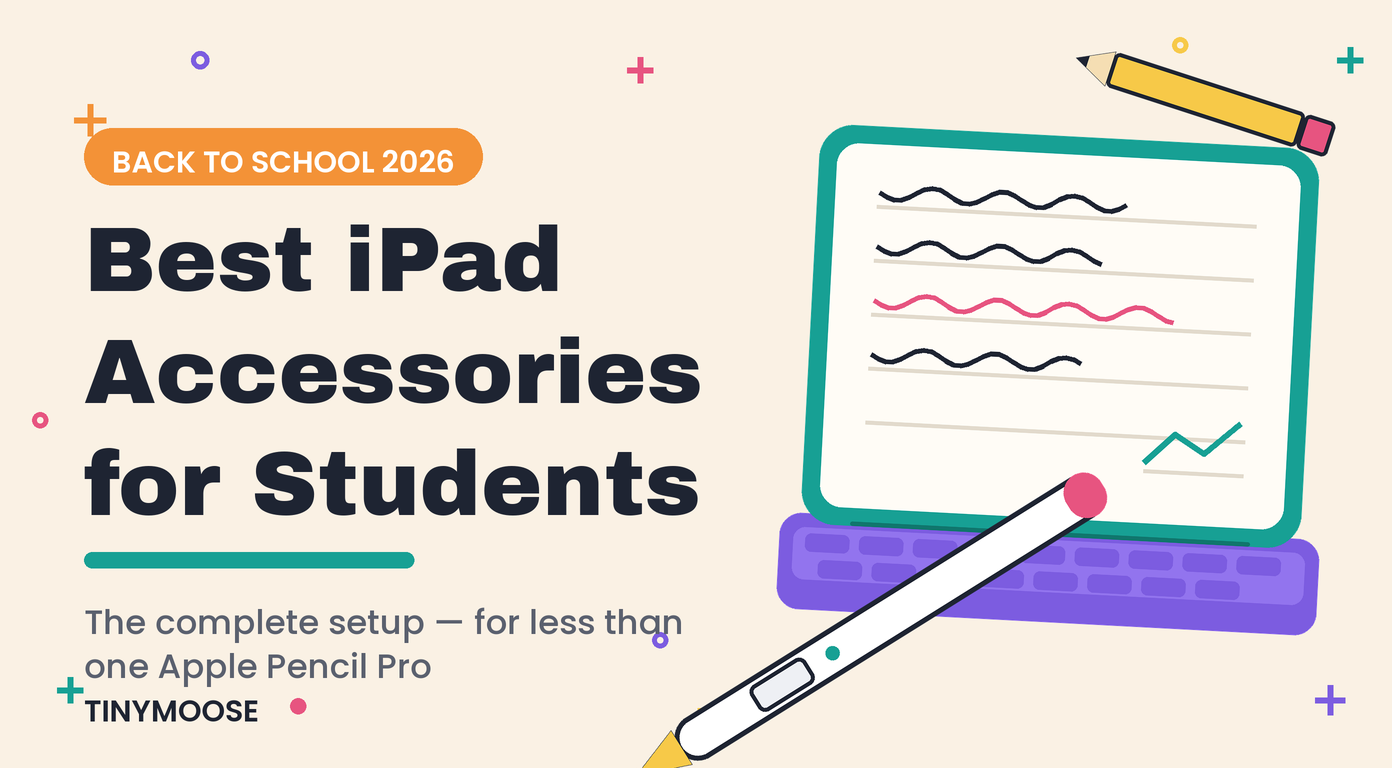
Studentuppsättningar bör fokusera på anteckningsupptagning, uppsatsskrivning och bärbarhet hela dagen. Snabb växling mellan handskrift och tangentbord är viktigare än en premiumdesign som är bunden till skrivbordet.
En stark studentverktygslåda innehåller vanligtvis:
- Pencil Pro 2 för föreläsningsanteckningar, marginalanteckningar och PDF-markeringar
- SpacePad för papper, diskussionsinlägg och fullständigt fodralskydd i en ryggsäck
- ett papperstexturerat skärmskydd för renare handstil
Det klassiska studentmisstaget är att spendera för mycket på en premiumstylus och för lite på skrivytan. För lektioner är anteckningskvalitet och komfort viktigare än avancerade kreativa gester.
Den digitala konstnären
Konstnärer bryr sig först och främst om två saker: pennans beteende och ritställningen.
Rätt verktygslåda betyder oftast Pencil Pro Ultra för dess gestgenvägar och lutningsrespons, ett matt eller papperstexturerat skydd om den texturen hjälper din kontroll, och ett stabilt ställ som skapar en låg ritvinkel. Om du exporterar filer, flyttar tillgångar eller förlitar dig på extern lagring blir en USB-C-hubb snabbt användbar.
Konstnärer kan lättare motivera Pencil Pro Ultra än de flesta användare eftersom snabba verktygsbyten och Smart Switch-gestkontroller verkligen används i Procreate-sessioner. Lektionen som ingen nämner tillräckligt: ditt ställ och skärmkänsla är inte bara detaljer. De är en del av ritupplevelsen.
Om du skissar i timmar, spendera mindre tid på att jämföra fodralfärger och mer tid på att jämföra känslan i handen.
Den fjärrstyrda proffset
Distansarbetsuppsättningar lever eller dör på skrivkomfort, samtalsberedskap och anslutning. För denna användare är ett tangentbord med en bra styrplatta troligen viktigare än något annat tillbehör.
Den användbara verktygslådan innebär vanligtvis:
- SpacePad Pro för långa skrivsessioner och den uppgraderade 5-vägs styrplattan
- en ställning eller fodral som håller kameran och skärmen i en smickrande samtalsvinkel
- en USB-C-hubb för laddning och tillbehör
- Pencil Pro 2 om du granskar dokument, signerar filer eller brainstormar visuellt
Denna grupp har också mest nytta av extern lagring, bättre laddningsvanor och grundläggande skrivbordsergonomi. iPad Pro kan absolut fungera som en seriös mobil arbetsstation – men bara om tillbehören stödjer verkligt arbete, inte bara dess estetik.
Fitness- eller vardagsanvändaren
Alla behöver inte en produktivitetsrigg. Många använder iPad Pro för planer, recept, streaming, lätt antecknande, träning och ibland e-post.
Den setupen är enklare:
- ett pålitligt fodral eller skydd
- en ställning för träning, recept och media
- Pencil Pro 2 om handskriven planering eller anteckningar är viktiga för dig
- lättstädade tillbehör som inte lägger till för mycket vikt
Komfort och bekvämlighet går före funktioner här. Ett tungt tangentbord du sällan använder är bara onödig vikt i väskan.
Tillbehörsrekommendationer efter användartyp
| Tillbehör | Studenten | Den digitala konstnären | Distansarbetaren | Fitnessanvändaren |
|---|---|---|---|---|
| Pekpenna | Pencil Pro 2 | Pencil Pro Ultra | Pencil Pro 2 | Pencil Pro 2 (valfritt) |
| Tangentbord | SpacePad | Valfritt om du inte skriver ofta | SpacePad Pro | Vanligtvis valfritt |
| Skärmskydd | Matt yta hjälper handskrift | Matt yta kan förbättra kontrollen | Beror på om handskrift är viktigt | Bra för anteckningar, inte obligatoriskt |
| Ställning eller fodral | Inbyggd i SpacePad | Stabil ställning med låg vinkel | Inbyggd i SpacePad Pro | Enkel ställning för visning och träning |
| USB-C-hubb | Användbart om du ofta flyttar filer eller håller presentationer | Hjälpsamt för förvaring och tillbehör | Mycket användbart för en skrivbords-liknande setup | Vanligtvis inte nödvändigt |
En bra verktygslåda håller sig liten
Din verkliga bästa-lista kan vara bara tre saker lång. Det är okej.
En slimmad uppsättning slår en överlastad eftersom varje del används. Om ett tillbehör inte stödjer en upprepad vana hamnar det i en låda. Rätt verktygslåda ska kännas som en noga utvald samling verktyg du litar på, inte en hög med saker du tänkt prova.
Att göra smarta val och underhålla din utrustning
Det dyra misstaget händer oftast efter kassan. Ett fodral ser fantastiskt ut på bilder och blir sladdrigt efter en månad. Ett billigt pekpennespets börjar hoppa över. En tangentbordsstyrplatta börjar vobbla precis när tillbehöret blivit en del av din dagliga rutin.
Bra köpbeslut kommer från att bedöma tillbehör som verktyg. Börja med de delar du rör vid varje dag, och se sedan hur de åldras. På ett tangentbord, leta efter stabila gångjärn, fast tangenttryckning och en yta som inte blir hal efter en vecka. På ett fodral, inspektera hörn, kamerautskärning och hur stället hanterar upprepad vikning. På en stylus, var uppmärksam på laddningssäkerhet, utbytbara spetsar och konsekvent handflatsavvisning.
Vad du ska köpa med omsorg
Byggkvalitet är viktigare än antal funktioner.
Ett tunt fodral är perfekt om du mest läser, antecknar och bär runt på iPaden på campus. En tyngre uppsättning är vettig om din iPad Pro spenderar långa timmar på skrivbordet för skrivande, samtal eller arbete med delad skärm. Rätt val beror på hur enheten faktiskt används, inte på vilken specifikationslista som är längst.
Material säger mycket. Hårda plastskal håller vikten nere men spricker vid påfrestningar. Mjukare TPU-kanter klarar fall bättre. Tygöverdrag på tangentbord känns lyxiga första månaden men samlar olja och damm snabbare än släta ytor. Magneter ska hålla iPaden stadigt nog så att du kan flytta den från skrivbord till soffa utan att behöva kontrollera låset.
Matcha priset med användningsfrekvensen. Att spendera mer på tillbehöret du använder varje dag lönar sig oftast. Att spendera för mycket på en nischad tilläggsprodukt gör det oftast inte.
Så får du tillbehören att hålla längre
Lite underhåll förhindrar vanliga fel:
- Rengör skärmen med en mikrofiberduk och borsta bort grus innan du torkar så att du inte slipar in smuts i glaset eller skyddet.
- Torka av tangentbordets tangenter och styrplattor regelbundet — hudolja förändrar känslan på tangenterna över tid och åldrar ytor snabbare än du tror.
- Kontrollera hörn på fodral och gångjärn varannan vecka; små sprickor sprider sig snabbt när materialet börjar separera.
- Håll din stylus på ett ställe — en magnetisk kant, ett fodral, någonstans konsekvent — så att den håller sig laddad och lätt att hitta.
- Kontrollera kompatibiliteten igen efter iPadOS-uppdateringar om du är beroende av snabbkommandon, gester eller tredjepartsfunktioner för stylus.
En regel till som är lätt att glömma: byt ut små förbrukningsvaror innan de blir större problem. Slitna pennspetsar, flagande skärmskydd och trasiga laddningskablar gör alla att iPaden känns sämre än den är.
Köp tillbehör som löser ett återkommande problem, och underhåll dem som arbetsutrustning.
Det tänkesättet gör att en uppsättning är användbar i åratal istället för bara en shoppingcykel. Tinymoose-serien — Pencil Pro Ultra för kraftanvändare, Pencil Pro 2 för vardagliga antecknare, och SpacePad och SpacePad Pro för skrivande — är byggd kring den idén: funktionell iPad-utrustning för regelbunden användning, inte nyhetsprylar som hamnar i en låda.
Dela:
De bästa teknikgåvorna under 100 för alla på din lista (2026)
Bästa alternativen till Apple Pencil: Lås upp din iPads verkliga potential