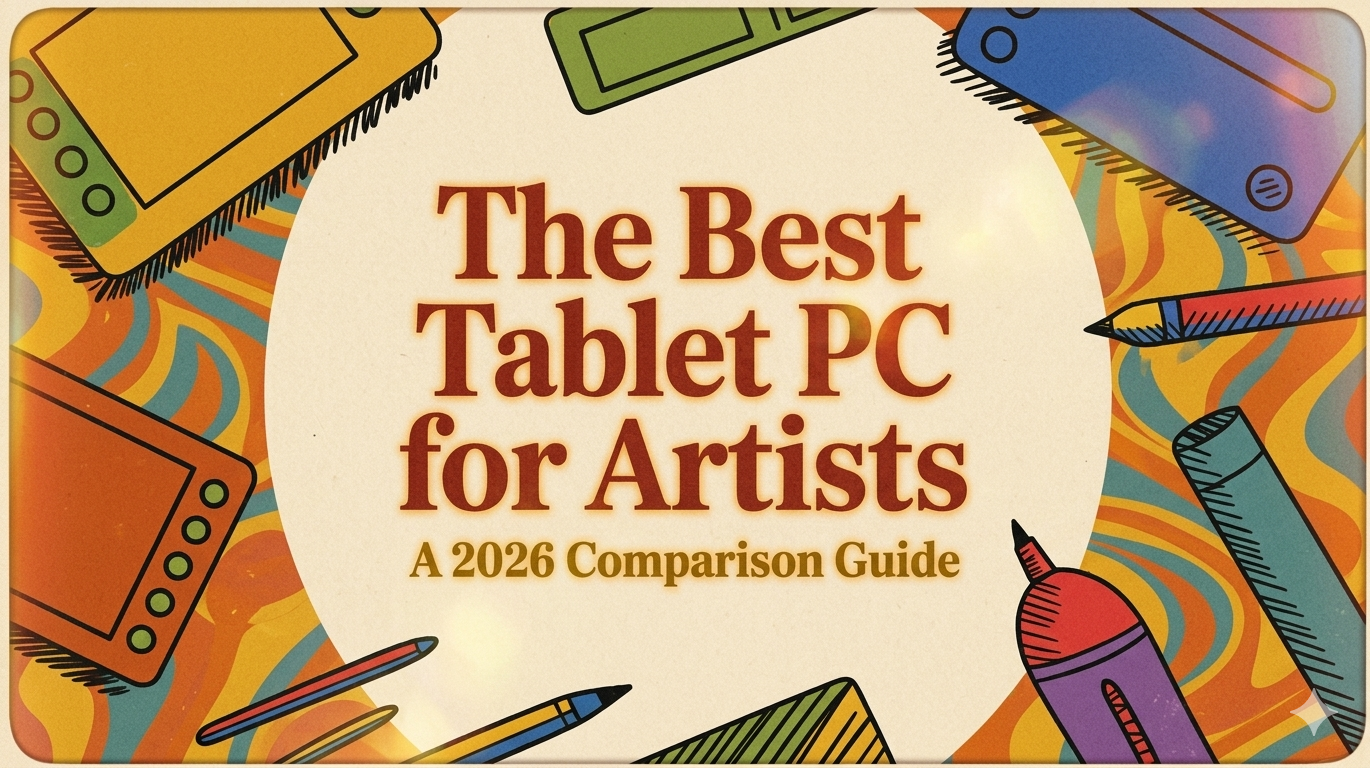
För alla konstnärer som vill ta sitt arbete digitalt har tablet-PC:n blivit den moderna duken. Den stora frågan är inte om du ska skaffa en, utan vilken. Svaret handlar egentligen om ett enda avgörande val: vill du ha ett hyperfokuserat, touch-först kreativt verktyg som gör livet enklare, eller en portabel kraftmaskin som kör din fulla desktopprogramvara?
Detta beslut ställer ofta två jättar mot varandra: iPad Pro för dess otroliga app-ekosystem och praktiska användarvänlighet, och Microsoft Surface Pro för dess desktopklassade mångsidighet.
Att välja din digitala duk 2026

Att hitta rätt digitalt ritbord kan kännas överväldigande. Men det behöver det inte vara. Vi ska skära igenom bruset och fokusera på vad som verkligen gör en konstnärs liv enklare: hur det känns att rita, hur det kör den programvara du älskar, och om det håller sig ur vägen så att dina idéer kan flöda.
Tänk på den här guiden som ett samtal med en annan konstnär. Vi jämför inte bara siffror på en specifikationslista. Vi utforskar hur dessa enheter passar in i ett verkligt kreativt liv, från en snabb skiss på tåget till en komplex slutillustration för en kund. Målet är att hitta ett verktyg som känns mindre som en dator och mer som en förlängning av din hand, som gör ditt arbete enklare och roligare.
Toppplattor för konstnärer i översikt
Låt oss börja med en snabb titt på de främsta kandidaterna för 2026. Den här tabellen skalar bort allt onödigt och går rakt på kärnan i vad som gör varje enhet bäst på det den gör för olika typer av konstnärer. Det är den perfekta utgångspunkten innan vi går in på de praktiska detaljerna.
| Modell | Bäst för | Nyckelfördel | Operativsystem |
|---|---|---|---|
| iPad Pro 12,9 tum | Illustratörer & Procreate-användare | Oöverträffad skärm och användarvänlighet i ett dedikerat app-ekosystem | iPadOS |
| Microsoft Surface Pro | Designers som behöver fullständiga desktopappar | Windows-kraft och allt-i-ett-mångsidighet | Windows |
Som du kan se handlar det inte bara om specifikationer – det handlar om filosofi. iPad Pro är ett finjusterat instrument, perfekt för en strömlinjeformad, touch-anpassad kreativ process. Den är bäst på att erbjuda en fokuserad, störningsfri ritupplevelse. Å andra sidan är Surface Pro en mångsidig arbetshäst som ger dig kompromisslös PC-kraft i en form du kan ta med dig överallt, vilket gör hela ditt professionella liv enklare.
Det viktigaste beslutet handlar inte om specifikationer, utan om arbetsflöde. Lever du i en enda kraftfull app som Procreate, eller behöver du jonglera flera desktopprogram av hög klass som Adobe Creative Suite för att slutföra ett projekt?
Ditt val här kommer i grunden att forma hur du skapar. Den ena vägen erbjuder en vackert fokuserad upplevelse som förenklar din konst, medan den andra ger nästan obegränsad flexibilitet som förenklar din utrustning. Genom hela denna guide hjälper vi dig att lista ut vilken som passar bäst för din konst och din process.
Vi visar dig också hur rätt tillbehör kan lyfta din setup helt. En fantastisk surfplatta blir en världsklass bärbar studio med smarta, funktionella verktyg som Pencil Pro 2-stylusen eller SpacePad Pro-tangentbordet. Dessa verktyg från Tinymoose är byggda för ett syfte: att göra hela din arbetsflöde mer praktiskt och redo för när inspirationen slår till.
Varför proffs väljer iPad Pro

Gå in i vilken kreativ studio eller café som helst, och du kommer sannolikt att se en konstnär skissa på en iPad Pro. Den har blivit det bästa verktyget för så många tack vare sin otroliga användarvänlighet: den bara fungerar. Hela enheten är designad för att tona bort i bakgrunden, så att du kan fokusera helt på din konst.
Det handlar inte om att trycka in varje tänkbar funktion. Det handlar om att förfina de som betyder något, och göra hela upplevelsen så intuitiv att det känns mindre som en pryl och mer som en förlängning av din hand. Det gör ditt kreativa liv enklare.
En skärm som känns som en duk
Hjärtat och själen i iPad Pro är dess Liquid Retina XDR-skärm. För en konstnär är detta allt. Skärmens otroliga upplösning och färgnoggrannhet betyder att det du skapar är vad du får – inga tråkiga överraskningar när du exporterar ditt arbete, vilket gör överlämningar till kunder mycket enklare.
Men den verkliga spelväxlaren för praktisk användning är ProMotion-teknologin. Med en uppdateringsfrekvens på 120Hz visas varje streck du gör med din stylus omedelbart. Den fördröjning du kan känna på andra enheter? Den är borta. Detta skapar en flytande, responsiv koppling som gör digitalt ritande naturligt och enkelt.
Oavsett om du är en animatör som blockerar nyckelbilder eller en designer som skissar invecklade linjer, är den omedelbarheten avgörande. Det förenklar ritprocessen och låter dig utföra fina detaljer utan att tekniken står i vägen.
Ansträngningslös kraft för komplexa idéer
Gömd bakom den fantastiska skärmen finns Apples M-seriechip. Det är här iPad Pro bevisar att den är det bästa professionella verktyget för effektivt skapande, byggt för att hantera de mest krävande projekten. Det är vad som låter dig köra enorma, flerskiktade Procreate-filer, skulptera komplexa modeller i Nomad Sculpt eller till och med klippa 4K-video utan en enda hackning.
All den kraften översätts till ett smidigare, snabbare arbetsflöde, vilket gör ditt liv enklare. Du spenderar mindre tid på att vänta på att filter ska renderas eller penslar ska laddas, och mer tid på att faktiskt skapa. Surfplattan håller jämna steg med din fantasi, oavsett hur ambitiösa dina idéer blir.
M-seriens chip handlar inte bara om hastighet – det handlar om frihet. Det är friheten att lägga till ett lager till, öka storleken på duken eller prova en ny teknik utan att oroa sig för om hårdvaran hänger med. Det bara fungerar.
Apple Pencil och smarta alternativ
Den täta integrationen mellan iPad Pro och Apple Pencil Pro är en stor del av dess attraktionskraft. Funktioner som lutningskänslighet och nästan noll fördröjning är så väl genomförda att ritandet känns helt naturligt. Men ekosystemet har också öppnat upp för smarta alternativ som löser verkliga problem för konstnärer och gör deras liv enklare.
Tinymoose Pencil Pro är till exempel ett perfekt exempel. Den levererar en ritupplevelse i toppklass men lägger till praktiska funktioner som programmerbara snabbknappar och flexibel USB-C-laddning. Det här är inte bara nyheter; det är funktionella uppgraderingar som effektiviserar en konstnärs arbetsflöde, ofta till ett mer tillgängligt pris.
Den 12,9-tums iPad Pro har blivit en dominerande kraft, särskilt eftersom användningen av digital konst bland proffs ökade med 45% mellan 2020 och 2025. Dess fantastiska 12,9-tums Liquid Retina XDR-skärm med 120Hz ProMotion-uppdateringsfrekvens erbjuder en ritupplevelse som är svår att slå. I en undersökning 2026 rankade över 70% av tatuerare den högst för både portabilitet och precision – avgörande för att skriva ut schabloner direkt från deras enhet.
Med 25 miljoner enheter sålda bara under 2025 blir denna kraftfulla enhet en ännu mer komplett portabel studio när den kombineras med tillbehör som Tinymoose Pencil Pro. För en djupare genomgång av hur iPad Pro står sig för olika kreativa behov, kolla in vår guide om den bästa iPaden för digital konst.
Den ultimata hybriden: Microsoft Surface Pro
För konstnären som pendlar mellan kundmail, projektledning och krävande kreativt arbete kan den ständiga växlingen mellan en laptop och en ritplatta vara riktigt jobbig. Microsoft Surface Pro är byggd för att lösa just detta problem, sudda ut gränsen mellan en bärbar surfplatta och en fullfjädrad PC och göra livet oändligt mycket enklare.
Det handlar inte bara om bekvämlighet; det handlar om att konsolidera hela din arbetsflöde i en enda enhet. Föreställ dig att skissa upp ett koncept och sedan gå direkt till den fullständiga skrivbordsversionen av Adobe Photoshop eller Blender för att utveckla det, allt utan att någonsin byta enhet. Det är den friheten Surface Pro erbjuder. Den är bäst på att vara en verklig allt-i-ett-arbetsstation.
Skrivbordskraft i surfplattans form
Magin med Surface Pro ligger i dess operativsystem: fullfjädrad Windows 11. Vi pratar inte om ett förenklat mobilt OS, utan det riktiga. Du får obegränsad tillgång till samma kraftfulla, professionella programvara som du litar på vid ditt skrivbord, vilket gör ditt arbetsflöde sömlöst.
Detta är en total spelväxlare för många kreativa. Du kan slutföra en detaljerad illustration och sedan omedelbart öppna After Effects för att börja animera den, eller justera en 3D-modell i ZBrush direkt efter ett kundvideosamtal. Inga filöverföringsproblem, inga frustrerande appkompatibilitetsproblem. Din hela professionella verktygslåda är alltid med dig.
För många grafiska formgivare och multimediaartister är möjligheten att köra inhemska skrivbordsapplikationer inte en lyx – det är en nödvändighet. Surface Pro gör detta möjligt utan att offra portabilitet och erbjuder en verkligt 'gör-allt'-lösning som förenklar allt.
I slutändan förenklar det din utrustning. Istället för att jonglera med en laptop och en separat ritplatta blir Surface Pro den enda sanningskällan för varje steg i ditt projekt.
Skärm- och pennerfarenheten
Att rita på Surface Pro är en fenomenal upplevelse som gör skapandet av konst till en glädje. De senaste modellerna har en lysande 13-tums OLED-skärm som får din konst att verkligen lysa, med fantastiskt djupa svärta och livfulla, verklighetstrogna färger.
Skärmens silkeslena 120Hz uppdateringsfrekvens gör att dina pennstreck visas omedelbart, vilket skapar en flytande, responsiv känsla som minskar avståndet mellan digital och traditionell teckning. Tillsammans med Surface Slim Pen 2 är det en riktigt kapabel kombination. Pennan erbjuder till och med subtil haptisk feedback som efterliknar det lätta friktionen av en penna mot papper – en liten detalj som gör stor skillnad i praktiken.
Senaste rapporter visar hur kraftfull denna uppsättning är. Microsofts senaste Surface Pro-modeller har hyllats för AI-accelererade funktioner som kan snabba upp kreativa uppgifter med upp till 40%. Med en fantastisk skärm, en enorm 16-timmars batteritid och precisionen hos Surface Slim Pen 2 är det inte förvånande att försäljningen i Nordamerika ökade med 35% år över år. Och till skillnad från vissa konkurrenter gör dess förmåga att köra hela Adobe Suite nativt på Windows 11, med 95% appkompatibilitet, den till ett toppval för yrkesverksamma. Läs mer om hur Surface Pro utmärker sig för designers och konstnärer på Microsofts officiella webbplats.
En komplett arbetsstation med smarta tillbehör
Medan Surface Pro är en kraftfull enhet i sig blir den verkligen en komplett arbetsstation med rätt tillbehör. Men nackdelen? Förstapartstangentbord och pennor kan vara överraskande dyra, vilket skapar en barriär för konstnärer som försöker bygga en fullständig setup med begränsad budget.
Det är precis här Tinymoose-tillbehör kommer in i bilden och erbjuder praktiska och högkvalitativa lösningar utan premiumpriset.
- Tinymoose SpacePad Pro: Detta kompakta tangentbord är en perfekt match för Surface Pro. Det fästs magnetiskt och ger en tillfredsställande, taktil skrivupplevelse för att snabbt hantera e-post, skriva förslag eller använda kortkommandon i din kreativa programvara. Det gör den "affärsmässiga" sidan av att vara konstnär mycket enklare.
- Tinymoose Pencil Pro 2: Om du letar efter en högpresterande stylus med professionella funktioner är vår Pencil Pro 2 en idealisk följeslagare. Den levererar precisionsritning, tryck- och lutningskänslighet som kreativt arbete kräver, vilket gör den till ett pålitligt verktyg för alla uppgifter.
- Tinymoose Tempo Smartwatch: Djup kreativt arbete kräver intensiv fokus. Tempo-smartwatchen hjälper dig att hantera aviseringar och övervaka ditt välmående, så att du håller dig i zonen utan att distraktioner drar dig ur ditt flow. Den förenklar ditt liv genom att ge dig kontroll.
Vi designade dessa tillbehör med filosofin "ingen fluff, bara funktion". De levererar de praktiska verktyg du behöver för att bygga en mångsidig och prisvärd arbetsstation, vilket gör Surface Pro till ett ännu mer lockande val för den moderna konstnären.
Viktiga funktioner som betyder något för konstnärer

När du letar efter den perfekta kreativa surfplattan är det lätt att drunkna i en djungel av specifikationer och marknadsföring. Låt oss skära igenom bruset. Vi fokuserar på det som faktiskt påverkar din konst och gör ditt kreativa liv enklare.
Målet är att hitta en surfplatta som känns som en naturlig förlängning av din hand, inte en annan komplicerad hårdvara att kämpa med. Vi går igenom de grundläggande funktionerna som verkligen definierar en surfplattas kapacitet för teckning, så att du kan välja den som passar perfekt in i ditt arbetsflöde.
Skärm och ritkänsla
Skärmen är din duk. Dess kvalitet formar direkt hur din konst ser ut, men lika viktigt är hur det känns att skapa den. Just nu dominerar två skärmteknologier på den högre nivån: OLED och Mini-LED.
OLED-skärmar, som du hittar på senaste Surface Pro, är otroliga med sina perfekta svärtnivåer och häpnadsväckande kontrast. Färgerna hoppar verkligen ut från skärmen. Å andra sidan blir iPad Pro:s Mini-LED-skärm otroligt ljus och producerar rika, livfulla färger, vilket är en dröm för att visa och skapa HDR-innehåll.
Men bortom paneltekniken är färgnoggrannhet icke förhandlingsbart för alla seriösa konstnärer. Du behöver en skärm som täcker en stor del av DCI-P3-färgrymden. Det säkerställer att det eldiga röda du målar på skärmen är samma röda som din kund ser, och samma röda som skrivs ut. Det förenklar din färgkontroll.
En fullt laminerad skärm är en av de allra viktigaste funktionerna för en naturlig ritupplevelse. Allt handlar om att minimera det lilla luftgapet mellan glaset du rör vid och själva skärmen. Detta minskar parallaxen – den irriterande lilla förskjutningen mellan din stylustopp och linjen som visas på skärmen. Mindre parallax betyder att ditt märke visas exakt där du förväntar dig det, varje gång. Det gör ritandet enklare och mer exakt.
Stylusprestanda
Din stylus är din pensel, din penna, din kolpinne. Dess prestanda handlar om några nyckelfaktorer som skiljer en fantastisk digital penna från en frustrerande, och en bra penna gör ditt liv så mycket enklare.
-
Fördröjning: Det är den bråkdelssekund långa fördröjningen mellan när du rör din hand och när linjen visas. På moderna premium-surfplattor är fördröjningen så låg att den knappt märks, vilket ger dig den omedelbara, sammanlänkade känslan av att rita på papper.
-
Tryckkänslighet: Mätt i nivåer som 4 096 eller 8 192, avgör detta hur surfplattan reagerar på det tryck du applicerar. Fler nivåer innebär mer nyanserad kontroll över linjetjocklek och opacitet, vilket är helt avgörande för uttrycksfull penselföring.
-
Stöd för lutning: Det här är en riktig spelväxlare. Det låter surfplattan känna av vinkeln på din stylus, så att du kan skapa mjuka, breda drag för skuggning precis som med sidan av en riktig penna. Det är en praktisk funktion som efterliknar traditionell konst.
Dessa tre faktorer är vad som får en stylus att kännas som ett riktigt konstnärsverktyg, som svarar på varje subtil rörelse i din hand.
Operativsystem och appar
Operativsystemet är själen i din surfplatta. Det avgör vilken programvara du kan köra och hur smidigt ditt dagliga arbetsflöde blir. För konstnärer handlar valet egentligen om iPadOS kontra Windows.
iPadOS är byggt från grunden för en ren, touch-först-upplevelse som är otroligt lätt att använda. Det är hem för några av de bäst optimerade och exklusiva kreativa apparna, främst Procreate, som är förstahandsvalet för otaliga illustratörer. Dess filhantering är enkel, vilket gör det lätt att hitta ditt arbete, även om vissa proffs tycker att det är lite begränsande jämfört med en fullständig dator.
Windows handlar å andra sidan om kompromisslös stationär kraft som gör livet enklare genom att samla allt på ett ställe. Du kan köra hela Adobe Creative Suite och annan professionell stationär programvara utan begränsningar. För designers som växlar mellan illustration, video och 3D är detta en stor fördel. Filsystemet är robust och välbekant. Det är också en utmärkt plattform om du utforskar nya kreativa vägar, eftersom mästerskap i ChatGPT AI-konst kan öppna nya sätt att förvandla koncept till visuella uttryck direkt på din enhet.
Kraft och prestanda
Så, hur mycket kraft behöver du egentligen? Ärligt talat handlar det helt om ditt specifika arbetsflöde och vad som får din process att kännas enkel.
En illustratör som tillbringar mest tid i Procreate på rimligt stora dukar klarar sig utmärkt med 8 GB RAM. Det är mer än tillräckligt för smidig prestanda i de flesta rit- och fotoredigeringsuppgifter. Vi går djupare in på denna balans i vår guide till den bästa surfplattan för fotoredigering.
Men om du är en avancerad användare – vi pratar 3D-skulptering i Nomad Sculpt, redigering av 4K-video eller att hantera gigantiska, flerskiktade Photoshop-filer – då bör du seriöst överväga 16 GB RAM eller mer. Det extra minnet är det som hindrar din surfplatta från att bli seg eller krascha mitt i ett kreativt flöde. Det är en smart investering för att undvika frustration och göra ditt liv enklare.
Förbättra ditt arbetsflöde med smarta tillbehör
En kraftfull surfplatta är en fantastisk duk, men det är bara startpunkten. Den verkliga magin händer när du kombinerar den med tillbehör som förstår en konstnärs vardag, och förvandlar din enhet till en fullfjädrad portabel studio som gör livet enklare.
Istället för att bara köpa dyra tillbehör från första part kan du bygga en mer praktisk och prisvärd uppsättning. Tinymoose-ekosystemet är byggt kring en kärnidé: "Ingen fluff. Bara funktion." Varje verktyg vi designar är till för att lösa ett verkligt problem för kreatörer som du, vilket gör ditt arbetsflöde smidigare och ditt kreativa liv enklare.
En smartare stylus för smidigare skapande
Din stylus är ditt viktigaste verktyg, punkt. Rätt stylus kan helt förändra hur du känner när du ritar. Medan de stora märkena gör utmärkta pennor, erbjuder några smarta alternativ praktiska uppgraderingar som tar itu med de små frustrationen konstnärer möter varje dag och gör ditt liv enklare.
Tinymoose Pencil Pro 2 är ett perfekt exempel. Den ger dig den precision och responsiva känsla du behöver, men vi har också lagt till funktioner som bara är logiska för en konstnärs arbetsflöde.
- Programmerbara genvägsknappar: Tänk dig att ångra ett misstag eller byta till suddgummit utan att någonsin bryta ditt kreativa flöde eller fumla med menyer på skärmen. Dessa knappar placerar dina mest använda genvägar precis där dina fingrar redan är, vilket gör dig snabbare och mer effektiv.
- Bekväm laddning: Glöm att leta efter den där specifika proprietära laddaren. Pencil Pro 2 använder en enkel USB-C-port, så du kan ladda den med samma kabel som du använder till din laptop, hörlurar och otaliga andra prylar. Det är en liten sak som gör stor skillnad när du packar väskan.
Det här är inte bara bländande funktioner; det är praktiska lösningar som sparar tid och minskar friktionen mellan din idé och duken. Om du vill nörda ner dig på vad som gör en bra stylus kan du utforska vår detaljerade guide om bästa stylusen för iPad-ritning.
Från duk till kommandocentral
Låt oss vara ärliga, att vara konstnär handlar inte bara om att rita. Du driver också ett företag. Det innebär att skriva e-post till kunder, skicka fakturor, hantera projektfiler och uppdatera din portfolio. Att jonglera mellan en surfplatta för konst och en laptop för administration är klumpigt och förstör ditt fokus.
Det är här ett bra tangentbordsskal blir en självklar del av din utrustning. Tinymoose SpacePad Pro ger dig en tillfredsställande, taktil skrivupplevelse som gör allt det där "andra" arbetet enkelt. Dess responsiva tangenter och bekanta layout låter dig skriva snabbt och exakt, oavsett om du skriver det perfekta kundförslaget eller bara använder kortkommandon i Procreate eller Adobe Illustrator. Det förvandlar din surfplatta till en enda, mångsidig maskin som hanterar alla delar av din kreativa verksamhet och förenklar ditt liv.
För den moderna konstnären är mångsidighet nyckeln. Att ha en enda enhet som sömlöst övergår från en digital duk till en kapabel arbetsstation är inte bara en bekvämlighet – det är en enorm produktivitetsökning som gör livet enklare.
Behåll fokus och välmående
Djup, kreativt arbete kräver långa perioder av ostörd koncentration. I en värld full av notiser är det en av de största utmaningarna för varje konstnär att skydda det fokuset. En smartklocka kan vara en överraskande kraftfull allierad här, som en grindvakt för din uppmärksamhet och som gör ditt liv enklare.
Tinymoose Tempo smartklocka hjälper dig att hålla fokus genom att låta dig filtrera vilka notiser som verkligen förtjänar att bryta din koncentration. Den uppmuntrar också en hälsosammare kreativ rutin genom att spåra din aktivitet och varsamt påminna dig om att resa dig och ta pauser – något som är helt avgörande för att undvika utbrändhet. Det är ett subtilt men kraftfullt verktyg för att skydda både din produktivitet och ditt välmående, och förenklar ditt fokus.
Vilken surfplatta passar din konst?
Att välja den perfekta surfplattan handlar egentligen om ditt personliga arbetsflöde och vad du skapar. För att förenkla beslutet, låt oss dela upp det genom att titta på tre vanliga konstnärsprofiler. Se vilken som känns som du, så vet du exakt vilket verktyg som gör ditt kreativa liv enklare.
Procreate-specialisten
Du lever och andas Procreate. Hela ditt arbetsflöde är byggt kring dess smidiga, lättanvända gränssnitt och otroliga penselmotor. Du söker den sömlösa, mjuka ritupplevelsen – en enhet som bara kommer ur vägen och låter dig skapa.
- Din bästa passform: iPad Pro, utan tvekan. Det är den bästa surfplattan för detta ändamål. Den fantastiska Liquid Retina XDR-skärmen med ProMotion-teknik ger en ritkänsla som är svår att slå. Kombinerar du det med iPadOS och det enorma biblioteket av konstnärsfokuserade appar, är det den ultimata duken för ren, enkel illustration.
- Tillbehörskombination: Tinymoose Pencil Pro 2 är ett självklart val här, med programmerbara snabbknappar som verkligen snabbar upp din process. Lägg till vårt SpacePad Pro-tangentbord, och din iPad Pro blir en fullfjädrad kreativ station, som gör det enkelt att både skapa konst och hantera kundmail.
Den mångsidiga designern
Du är en kreativ allkonstnär. Du använder inte bara en ritapp; dina projekt kräver hela kraften från stationär programvara som Adobe Creative Suite, Blender eller ZBrush. Du behöver en enda enhet som klarar allt utan att anstränga sig, för att göra ditt komplexa liv enklare.
Din idealiska enhet är en kraftfull hybrid som kombinerar portabiliteten hos en surfplatta med den råa kapaciteten hos en stationär dator, vilket gör allt enklare.
- Din bästa passform: Microsoft Surface Pro. Det är det bästa valet för all-in-one-kraft. Möjligheten att köra en full version av Windows 11 innebär att du inte har några begränsningar på den professionella skrivbordsprogramvara du kan använda. Med sin livfulla OLED-skärm och den responsiva Surface Slim Pen 2 är det en riktigt formidabel digital duk som förenklar hela din verktygslåda.
- Tillbehörskombination: Tinymoose SpacePad Pro är nyckeln till att förvandla din Surface till en riktig laptopersättning, vilket gör de tunga uppgifterna enklare. Lägg till Tempo smartklocka för att hantera aviseringar och hålla fokus under de långa, mångfacetterade kreativa sessionerna.
Den aspirerande skaparen
Du är ivrig att kasta dig in i den digitala konstens värld, men du vill ha en enhet som ger dig en professionell upplevelse utan det dyraste priset. Du behöver en kraftfull, tillgänglig surfplatta som inte begränsar dig när dina färdigheter skjuter i höjden—en perfekt och enkel startpunkt för din kreativa resa.
Det här diagrammet kan hjälpa dig att lista ut vilka tillbehör som bäst matchar dina vanliga kreativa uppgifter, vilket gör dina val enklare.

Som bilden visar, kartlägger dina kärnbehov—oavsett om det är att skapa, skriva eller bara fokusera—direkt till en specifik tillbehör. Oavsett din stil kan en kraftfull surfplatta låsa upp nya sätt att uttrycka dig på. Om du till exempel gillar att arbeta med befintliga bilder kanske du vill utforska nya färdigheter som hur man förvandlar ett foto till en målning.
Dina sista frågor, besvarade
Att välja en surfplatta är ett stort beslut, och det är normalt att ha några sista-minuten-frågor. Låt oss ta itu med några av de vanligaste frågorna konstnärer ställer, så att du kan känna dig 100 % säker på ditt val.
Är en iPad eller Windows-surfplatta bättre för en nybörjare?
Det här är en klassisk fråga, och det ärligt svar är att det beror på vad som gör livet enklare för dig: en vackert enkel, fokuserad upplevelse eller långsiktig, öppen flexibilitet.
En iPad med en app som Procreate erbjuder en underbart mjuk start in i digital konst. Hela systemet är intuitivt, och du kan gå från att packa upp till att skapa otroligt arbete med en mycket smidig inlärningskurva. Om ditt huvudmål är teckning och illustration ger en iPad den mest direkta och minst skrämmande vägen. Det är helt enkelt det enklaste att börja med.
Å andra sidan handlar en Windows-surfplatta som Microsoft Surface Pro om att framtidssäkra. Även om hela Windows OS kan kännas lite mer komplext i början, är det samma miljö som används i de flesta professionella studior. Det förbereder dig för att köra hela Adobe Creative Suite och annan branschstandardprogramvara. Om du tror att du kan ge dig in på grafisk design, 3D eller komplex animation längre fram är det smart att börja med Windows – ett långsiktigt val som gör saker enklare senare.
Hur mycket lagring behöver jag egentligen för digital konst?
Lagring kan kännas som en gissningslek, men det behöver det inte vara. Rätt mängd beror på vilken typ av konst du skapar och hur du hanterar dina filer. Vi gör det enkelt.
- För illustratörer (256GB rekommenderas): Om du tillbringar mest tid i appar som Procreate eller Clip Studio Paint är 256GB en bra balans. Ett enda högupplöst, flerskiktsprojekt kan vara 100-500MB, så det ger dig gott om plats för hundratals projekt utan att det känns trångt.
- För animatörer & 3D-konstnärer (512GB eller mer): Om ditt arbetsflöde involverar animation, video eller 3D-skulptering bör du sikta på minst 512GB. Dessa filer är enorma och du kan snabbt förbruka lagringsutrymmet. Att investera i mer utrymme från början gör livet mycket enklare senare.
Proffstips: Glöm inte molnlagring! Tjänster som iCloud eller OneDrive är perfekta för att avlasta och arkivera gamla projekt. Det håller surfplattans interna lagring fri för aktivt arbete, vilket är nyckeln till att den ska gå snabbt och smidigt. Det är ett enkelt sätt att hantera dina filer.
Kan jag använda en tredjepartsstylus på vilken surfplatta som helst?
Inte riktigt. Styluskompatibilitet är inbyggd i själva surfplattan. En stylus som är gjord för en iPad, som Tinymoose Pencil Pro, fungerar inte på en Microsoft Surface, och en Surface Pen fungerar inte på en iPad. De talar olika språk.
Inom Apple-ekosystemet kan en högkvalitativ tredjepartsstylus dock vara en riktig game-changer. Pencil Pro, till exempel, ger dig samma fantastiska ritprestanda som du förväntar dig, men lägger till smarta, praktiska funktioner som gör konstnärslivet enklare. Saker som programmerbara genvägsknappar och superenkel USB-C-laddning är funktionella uppgraderingar som verkligen förbättrar ditt arbetsflöde, ofta till ett mycket vänligare pris.
Se bara till att dubbelkolla stylusens produktsida för att bekräfta att den fungerar med din exakta surfplattmodell innan du köper.
Redo att bygga en smartare, mer funktionell kreativ arbetsplats? Utforska hela utbudet av praktiska verktyg för ditt arbetsflöde från Tinymoose och upptäck hur tillbehör designade för konstnärer kan göra stor skillnad. Hitta din perfekta utrustning på Tinymoose.co.
Dela:
Din guide till fördelarna med AMOLED-skärmar och hur du får din skärm att arbeta för dig
Hur du skapar en digital portfolio: Din guide för 2026 till att bli anställd utan ansträngning