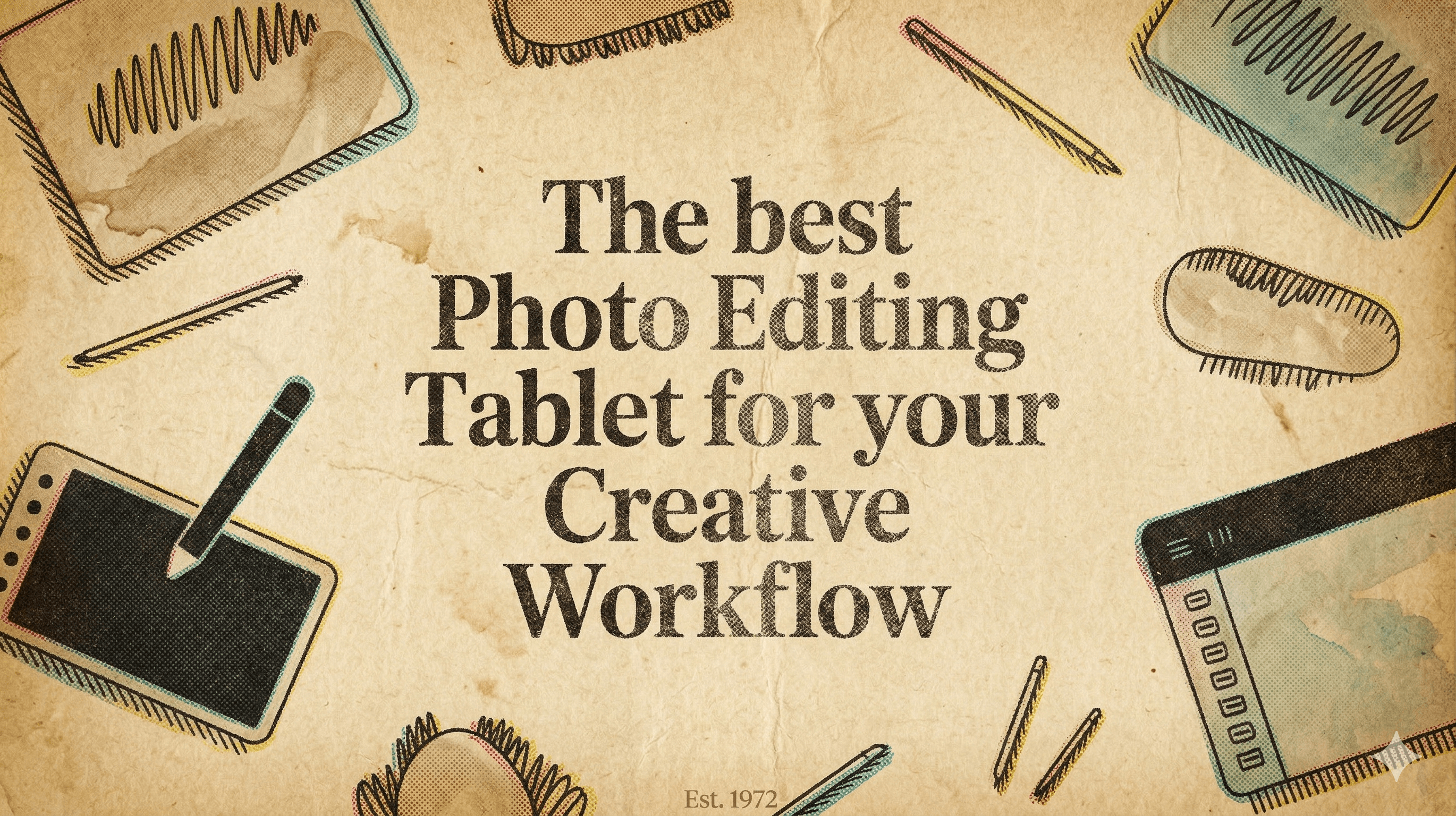
Om du letar efter den bästa surfplattan för fotoredigering har du säkert märkt att kreativa övervägande föredrar enheter som iPad Pro och iPad Air. Det finns en enkel anledning: de gör professionell redigering otroligt enkel. Det här är inte bara prylar; det är kraftfulla, allt-i-ett-studior som förenklar ditt arbetsflöde och gör precisa justeringar mer naturliga och snabbare än någonsin tidigare.
Varför en surfplatta gör fotoredigering så mycket enklare
Dagarna då man var bunden till ett skrivbord för professionell fotoredigering är över. Fotografer och designers väljer allt oftare den smidiga, praktiska kontroll som bara en högpresterande surfplatta kan erbjuda. Det handlar inte bara om bärbarhet – det handlar om att fundamentalt förändra din koppling till ditt arbete och göra hela processen mer intuitiv och njutbar.

Föreställ dig att använda en stylus för att måla ljus och skugga direkt på dina foton. Det känns lika naturligt som en pensel på en duk och förvandlar svåra uppgifter som maskering, dodge och burn till en organisk, tillfredsställande process. Det är en nivå av kreativ frihet som en mus helt enkelt inte kan matcha. Om du vill lära dig mer om teknikerna kan du fördjupa dig i fotoredigering för att se vad som är möjligt.
Framväxten av ett enklare arbetsflöde
Det här är inte bara en nischtrend; det är en fullständig omvandling av hur kreativa arbetar. Den globala marknaden för grafiska surfplattor nådde otroliga 3,417 miljarder USD år 2024 och är på väg att nå 9,043 miljarder USD år 2035. Denna tillväxt speglar en verklig efterfrågan från kreativa som vill ha verktyg som gör deras liv enklare och möjliggör precisa redigeringar var som helst. Faktum är att över 40% av designers på stora marknader nu använder surfplattor dagligen för att göra sitt arbete snabbare och mer effektivt.
Hur ett surfplattebaserat arbetsflöde gör livet enklare
Att byta till redigering på en surfplatta ger verkliga, praktiska fördelar som förenklar din process, oavsett om du är i studion eller ute på plats.
- Intuitiv kontroll: En stylus ger dig otrolig precision för detaljerad retuschering, så att du kan göra subtila justeringar som nästan är omöjliga med en mus. Det känns helt enkelt rätt.
- Ultimat bärbarhet: Redigera högupplösta RAW-filer på en parkbänk, i ett café eller på ett flygplan. Din studio är där du är, vilket gör din tid mer produktiv.
- Effektiviserad process: Gå från kamera till surfplatta till kund på några minuter. Du kan överföra foton, redigera dem och dela dem på sociala medier utan att någonsin behöva använda en dator.
- Fokuserad Miljö: Den helskärms- och immersiva naturen hos surfplatteappar hjälper dig att stänga ute distraktioner, så att du kan koncentrera dig helt på din kreativa vision.
Den bästa surfplattan för fotoredigering är den som får ditt arbete att kännas mindre som arbete. Den ska integreras sömlöst i ditt liv och bli en förlängning av ditt kreativa sinne, inte bara en annan teknisk pryl.
Den här guiden hjälper dig att hitta den perfekta passformen. Vi går igenom de funktioner som är viktiga, jämför de bästa alternativen och ger dig praktiska tips för att bygga en kraftfull och njutbar redigeringsuppsättning. Du kanske också vill kolla in vår relaterade guide om att använda en iPad som ritplatta för att utforska fler kreativa möjligheter.
Nyckelfunktioner som definierar en utmärkt surfplatta för fotoredigering
När du handlar efter en surfplatta för fotoredigering är det lätt att gå vilse i en djungel av specifikationer. Tricket är att fokusera på vad som gör din dagliga arbetsflöde enklare och mer effektivt. Rätt funktioner gör inte bara en surfplatta kraftfull; de gör din kreativa process snabbare, mer intuitiv och helt enkelt bättre.

Allt börjar med skärmen. En fantastisk skärm är ingen lyx – det är grunden för varje enskild redigering. Du behöver en skärm som visar dina foton med absolut trohet, så att färgerna du ser är exakt de färger dina kunder kommer att se.
Skärmen: Din Duk
Din surfplattas skärm är din digitala duk, och dess kvalitet är icke förhandlingsbar för praktiska, professionella resultat. Moderna surfplattor har otroliga skärmteknologier som OLED och Liquid Retina, som levererar djupa, bläcksvarta nyanser och livfulla färger. Det är inte bara modeord; det betyder att dina bilder ser mer exakta och verklighetstrogna ut, så att du kan redigera med självförtroende.
Några viktiga specifikationer är avgörande för att göra ditt liv enklare:
- Hög Upplösning: Fler pixlar betyder skarpare detaljer. Detta är avgörande för att kontrollera skärpa, förfina intrikata masker eller göra känslig hudretuschering utan gissningar. En högupplöst skärm låter dig zooma in utan att bilden blir suddig.
- Färgnoggrannhet & Färgrymd: Leta efter surfplattor som täcker 100 % av DCI-P3-området. Detta säkerställer att din skärm kan återge ett enormt färgomfång, vilket är avgörande för att få de där livfulla landskapen eller subtila hudtonerna helt rätt, varje gång.
- Ljusstyrka: En ljus skärm (mätt i nits) är avgörande för redigering i olika miljöer. Hög ljusstyrka låter dig se varje detalj tydligt, oavsett om du är i en mörk studio eller utomhus, utan att kämpa mot bländning.
För att förenkla ditt val, här är en snabb sammanfattning av vad som verkligen betyder något.
Viktiga tabletts-specifikationer för fotoredigering förklarade
| Specifikation | Varför det är viktigt för fotoredigering | Vad du ska leta efter |
|---|---|---|
| Färgomfång | Bestämmer färgomfånget som skärmen kan visa. Ett bredare färgomfång betyder mer exakta, livfulla färger, vilket är avgörande för professionellt arbete. | 99-100% DCI-P3 eller Adobe RGB-täckning. |
| Upplösning | Högre upplösning innebär skarpare bilder, vilket låter dig se fina detaljer för precisa redigeringar som retuschering och maskning. | 2K (QHD) eller högre. Sök efter en pixeltäthet på minst 264 PPI. |
| Ljusstyrka | Hög ljusstyrka hjälper dig att se ditt arbete tydligt i alla ljusförhållanden och får HDR-innehåll att poppa. | Minst 500 nits. 1000+ nits för HDR-redigering. |
| Processor (CPU/GPU) | Tablettens "motor". En kraftfull chip förhindrar fördröjning när du arbetar med stora RAW-filer, flera lager och komplexa filter. | Apples M-serie-chips eller högpresterande Snapdragon/Exynos-chips. |
| Stöd för stylus | Möjliggör exakt, naturlig redigering med tryck- och lutningskänslighet för uppgifter som att ljusa upp, mörka ner och måla. | Sök efter låg latens, tryckkänslighet och lutningsigenkänning. |
| Lagring | RAW-filer och högupplösta bilder tar mycket plats. Tillräckligt med lagring förhindrar att du ständigt måste hantera filer. | 256GB minst; 512GB eller fler rekommenderas för seriöst arbete. |
| Portar | En mångsidig port som USB-C/Thunderbolt är avgörande för snabba filöverföringar och anslutning till externa enheter och skärmar. | Minst en USB-C-port med Thunderbolt/USB 4-stöd. |
Dessa kärnspecifikationer är vad som gör din mobila redigeringsupplevelse sömlös och njutbar, så ha dem i åtanke när du jämför modeller.
Den kraftfulla processorn
Processorn är motorn som garanterar en smidig och frustrerationsfri redigeringssession. När du arbetar med enorma RAW-filer eller staplar dussintals lager i Photoshop är det sista du vill ha fördröjning. En kraftfull chip säkerställer att tekniken hänger med din kreativitet.
Chips som Apples M-serie är designade för att hantera dessa uppgifter utan ansträngning. De levererar blixtsnabb prestanda samtidigt som de är otroligt energieffektiva, så att du kan arbeta med tunga projekt i timmar utan att vara bunden till en laddare eller drabbas av fördröjningar. Det bara fungerar.
En kraftfull processor snabbar inte bara upp rendering; den skapar ett flytande, responsivt arbetsflöde där tekniken försvinner och låter dig fokusera helt på din konst.
Detta behov av prestanda är en stor drivkraft inom den kreativa industrin. Marknaden för fotoredigeringsprogramvara i Nordamerika värderades till över 1027,48 miljoner USD år 2024, delvis eftersom så många proffs har anammat högpresterande plattformar som iOS. Med 75 % av digitala skapare som rapporterar att surfplattor ökar deras redigeringshastighet med 25-40 % är det tydligt att robust hårdvara kombinerat med intuitiva verktyg gör verklig skillnad. Du kan lära dig mer om marknadstrenderna för fotoredigeringsprogramvara i Nordamerika för att se hur stor denna förändring är.
Stylusen: En verklig förlängning av din hand
Slutligen är stylusen det som kopplar dig till ditt arbete. Den förvandlar redigering från att klicka med en mus till något direkt, taktilt och konstnärligt. En bra stylus ska kännas som en naturlig förlängning av din hand och erbjuda precisionen hos en riktig penna eller pensel. Vi rekommenderar Tinymoose Stylus Pens.
Här är de viktigaste funktionerna som får en stylus att glänsa:
- Tryckkänslighet: Detta låter dig variera tjockleken eller opaciteten på en penseldragning genom att helt enkelt trycka hårdare eller mjukare, precis som en riktig pensel. Det är avgörande för naturligt utseende redigeringar.
- Vinklingsigenkänning: Möjligheten att vinkla stylusen för att ändra penselns form är perfekt för att skapa mjuka, fjäderlika kanter eller naturligt utseende skuggning.
- Låg latens: Latens är den lilla fördröjningen mellan din rörelse och märket som visas på skärmen. Ultra-låg latens gör upplevelsen omedelbar och otroligt responsiv.
När dessa tre element – en lysande skärm, en kraftfull processor och en responsiv stylus – förenas, får du den bästa surfplattan för fotoredigering. Det är ett verktyg som inte bara presterar utan också inspirerar, vilket gör din kreativa process snabbare, mer exakt och verkligen roligare.
Varför professionella fotografer använder iPad-ekosystemet
En tablets kraft är en sak, men det som verkligen gör den till det bästa verktyget för jobbet är mjukvaran. Här är iPad helt enkelt oslagbar. Appar är inte bara kraftfulla; de är byggda för att fungera i perfekt harmoni med Apples hårdvara, vilket skapar ett sömlöst och otroligt effektivt arbetsflöde som proffs förlitar sig på varje dag.
Denna täta relation mellan hårdvara och mjukvara är ingen slump. Utvecklare för iPadOS får direkt tillgång till Apples M-seriechip och grafikteknik. Resultatet är programvara som känns otroligt flytande och stabil, även när du pressar den till gränsen med enorma RAW-filer eller komplexa kompositer. Det bara fungerar, varje gång.
Ett app-ekosystem byggt för proffs
iPad är hem för verkliga skrivbordsklassversioner av branschstandardprogramvaran som fotografer har litat på i årtionden. Det här är inte nedskalade mobilappar; de är fullfjädrade kraftpaket, helt omdesignade för en pek- och stylusarbetsflöde som gör redigering enklare och mer intuitiv.
Så här förvandlar några av de bästa apparna iPad till en professionell studio:
- Adobe Lightroom: För otaliga fotografer är Lightroom kommandocentralen för hela deras arbetsflöde. iPad-versionen erbjuder nästan fullständig funktionsparitet med skrivbordsversionen, vilket låter dig sömlöst gallra, organisera och redigera ditt arbete. Dess molnbaserade synkronisering håller allt konsekvent över alla dina enheter, utan ansträngning.
- Adobe Photoshop: Att köra fullversionen av Photoshop på en platta var en gång en dröm, men nu är det verklighet. Från att göra intrikata val med en Apple Pencil till att hantera komplexa lager-masker, är hela upplevelsen snabb och intuitiv. Det gör krävande retuschering mer som att måla än att klicka med musen.
- Affinity Photo: En stor favorit bland proffs, Affinity Photo är ett kraftpaket känt för sin råa hastighet och omfattande funktioner. Den är fullt optimerad för Apples M-seriechip och levererar otrolig prestanda för allt från fokusstackning till redigering av 360-gradersbilder, vilket gör komplexa uppgifter enkla.
Den verkliga magin med iPad-ekosystemet är att professionell programvara inte bara är tillgängligoptimerad. Dessa appar är designade för att pressa ut varje droppe potential ur hårdvaran, vilket gör den kreativa processen direkt och omedelbar.
Hur det fungerar i verkligheten
Det ultimata testet för vilken fotoredigeringsplatta som helst är hur den förenklar en proffsig användares arbete. Här glänser iPad, som smidigt anpassar sig till olika arbetsflöden, oavsett om du är på plats eller i studion.
Föreställ dig en bröllopsfotograf mitt i en fotografering. De kan koppla sin kamera direkt till en iPad Pro. Detta låter dem överföra RAW-filer omedelbart, kontrollera skärpan på en stor, färgkorrigerad skärm och till och med visa kunder en fantastisk bild bara några ögonblick efter att den tagits. Den omedelbara återkopplingen är en total spelväxlare som gör deras liv enklare.
Eller tänk på en designer som arbetar med en komplex komposition på ett tåg. En iPad Air ger all kraft som behövs för att sammanfoga högupplösta bilder, måla precisa masker med en stylus och applicera filter. Denna typ av bärbar kraft, som förenklar arbete på språng, var otänkbar för bara några år sedan.
Marknaden talar för sig själv
Denna professionella preferens för iPad-ekosystemet är inte bara anekdotisk; siffrorna stödjer det. År 2024 nådde iOS-segmentet av marknaden för fotoediteringsappar hela 385 miljoner USD och tog en 35,9 % marknadsandel. Denna tillväxt drivs av en enkel verklighet: med 92,5 % av alla foton som nu tas med mobila enheter har efterfrågan på kraftfulla redigeringsverktyg för användning på språng exploderat.
iPaden, med sin perfekta kombination av högkvalitativ hårdvara och ett moget app-ekosystem, är unikt positionerad för att möta detta behov. Detta gäller särskilt på prosumer-marknaden, som har en dominerande 44,6 % marknadsandel. Du kan fördjupa dig i tillväxten av marknaden för fotoediteringsappar för att se hur betydande denna trend är.
Välja rätt iPad för dina redigeringsbehov
Att välja rätt iPad handlar inte om att skaffa den dyraste; det handlar om att matcha surfplattans styrkor med ditt kreativa arbetsflöde för att göra livet enklare. Varje modell i Apples sortiment är kraftfull, men varje är bäst på något särskilt. Den här guiden skär igenom bruset för att hjälpa dig hitta den perfekta iPaden för hur du verkligen arbetar.
Hela beslutet handlar om din process. Är du en studioexpert som hanterar enorma RAW-filer och komplexa kundprojekt? Eller en seriös hobbyist som behöver kraft för personliga projekt? Kanske är du ständigt på språng, gallrar och redigerar bilder direkt på plats.
Detta flödesschema ger en snabb visuell hjälp för att avgöra vilken väg som passar bäst för ditt arbete.

Som du kan se är iPad-ekosystemet svårt att slå för ett riktigt sömlöst, professionellt arbetsflöde.
Låt oss gå igenom huvudaktörerna och se var de passar bäst.
Jämförelse av iPad-modeller för fotoediterare
Den här tabellen ger en snabb översikt över de modeller som de flesta fotografer överväger, med fokus på det som verkligen betyder något för ett smidigt arbetsflöde.
| Funktion | iPad Pro | iPad Air | iPad Mini |
|---|---|---|---|
| Bäst för | Professionella & avancerade retuschörer som behöver ultimat prestanda och skärm. | Entusiaster, semi-proffs och konstnärer som behöver en kraftfull allroundare. | Fotografer på språng, resenärer och för urval på plats. |
| Skärm | Tandem OLED / Liquid Retina XDR med ProMotion | Liquid Retina med P3 Wide Color | Liquid Retina med P3 Wide Color |
| Processor | M4 (senaste modellerna) | M2 (senaste modellerna) | A15 Bionic |
| Kärnstyrka | Omatchad skärmkvalitet och rå bearbetningskraft. | En fantastisk balans mellan professionell kraft och värde. | Oöverträffad portabilitet för mobila arbetsflöden. |
| Vanligt användningsområde | Intensiv retuschering i Photoshop, exakt färgkorrigering, HDR-redigering. | Redigering av RAW-filer i Lightroom, allmän fotohantering och konst. | Urval av bilder efter en fotografering, initiala redigeringar och bibliotekshantering. |
I slutändan är det bästa valet det som tar bort friktion från din kreativa process, oavsett om det betyder att ha den bästa skärmen möjligt eller en enhet som får plats i din kameraväska.
iPad Pro: Den kompromisslösa kraftpaketet
För den professionella fotografen eller seriösa retuschören är iPad Pro det definitiva valet. Det här är inte bara en surfplatta; det är en mobil arbetsstation byggd för kreativa som vägrar kompromissa med prestanda eller skärmkvalitet. Dess kraftfulla M-serieprocessor hanterar enkelt krävande uppgifter som att redigera enorma RAW-filer, stapla dussintals lager i Photoshop eller köra komplexa filter i Affinity Photo.
Men det är skärmen som verkligen gör den bäst. Med modeller som har den lysande Tandem OLED eller Liquid Retina XDR-skärmen får du oöverträffad färgnoggrannhet, otrolig ljusstyrka för HDR-arbete och verkligt djupa svärta. Denna nivå av visuell kvalitet är avgörande när dina redigeringar måste vara pixelfelfria.
iPad Pro är inte för alla, och det behöver den inte vara. Den är byggd för den kreativa som behöver absolut bästa prestanda och skärmteknik som finns, vilket gör den till den bästa surfplattan för fotoredigering i krävande professionella arbetsflöden.
iPad Air: Den högpresterande allroundaren
iPad Air är den perfekta lösningen för många kreativa. Den har mycket av samma råa kraft som Pro, tack vare sin egen M-serieprocessor, men till ett mer tillgängligt pris. Det gör den till ett otroligt värde för fotoentusiaster och semi-proffs som behöver en snabb, responsiv enhet för en sömlös redigeringsupplevelse.
Du får fortfarande en fantastisk Liquid Retina-skärm med fantastisk färgåtergivning som täcker det viktiga P3 breda färgomfånget, vilket gör den mer än redo för seriös redigering. M-chippet inuti gör att Air klarar Lightroom och Photoshop utan problem, utan fördröjning när du justerar reglage eller exporterar en stor mängd bilder. Det är den perfekta kombinationen av prestanda och praktikalitet.
Om du vill se hur de olika iPads står sig för annat kreativt arbete, kolla in vår guide till bästa iPad för digital konst.
iPad Mini: Den ultimata portabla redigeraren
Låt inte storleken lura dig—iPad Mini är en riktigt kapabel enhet som är bäst på en sak: portabilitet. Dess kompakta design gör den till den perfekta resekompisen för att gallra bilder, göra snabba redigeringar och hantera ditt bildbibliotek var som helst. För eventfotografer eller resebloggare är Mini en spelväxlare som gör livet på resande fot mycket enklare.
Du kan slänga ner den i en kameraväska och ha ett kraftfullt verktyg för att granska bilder direkt efter en fotografering. Den förenklar sorteringen av hundratals bilder, applicering av förinställningar i Lightroom och utförande av initiala färgkorrigeringar på sin skarpa, färgkorrekta Liquid Retina-skärm. Medan du sparar den tunga retuscheringen till en större skärm är Mini:s A-serie-chip mer än tillräckligt kraftfullt för de flesta dagliga redigeringsuppgifter.
Det gör helt enkelt de inledande, ofta tråkiga, delarna av fotoredigeringsarbetet snabbare och mer bekvämt än någonsin tidigare.
Lås upp din surfplattas fulla potential med smarta tillbehör
En kraftfull surfplatta är bara början. För att förvandla den till den ultimata fotoredigeringsmaskinen behöver du rätt utrustning. Dessa verktyg är inte bara tillägg; de är viktiga delar som gör din kreativa process snabbare, mer exakt och mycket bekvämare.

Ärligt talat är den allra viktigaste tillbehöret för alla fotoredigerare en stylus. Det är det som kopplar din hand till duken och gör detaljerade redigeringar lika naturliga som att skissa. Även om Apples penna är ett bra val, erbjuder alternativ som Tinymoose Pencil Pro samma professionella funktioner som gör redigeringen enkel, men utan det höga priset.
Stylusen: En kreativs bästa vän
Tinymoose Pencil Pro är konstruerad för att vara det bästa verktyget för jobbet, och ger dig den finjusterade kontroll som krävs för krävande fotoredigering. Dess funktioner är designade med praktisk användning i åtanke, för att hjälpa dig arbeta mer effektivt istället för att kämpa med dina verktyg.
Så här gör tekniken ditt liv enklare:
- Handflatsavvisning: Du kan vila handen naturligt på skärmen medan du arbetar, precis som på papper, utan att göra oönskade märken. Denna enkla funktion är en revolution för komfort under långa redigeringspass.
- Vinkelkänslighet: Precis som en riktig penna skapar lutning av stylusen bredare, mjukare streck. Detta är perfekt för att fjädra masker eller måla in naturliga justeringar. Det lägger till ett lager av konstnärlig kontroll som är omöjligt med en mus.
- Programmerbara genvägsknappar: Här börjar du verkligen spara tid. Anpassa knapparna för frekventa åtgärder som "ångra" eller "suddgummi". Istället för att leta i menyer håller ett enkelt klick dig i det kreativa flödet.
Dessa funktioner samverkar för att skapa en upplevelse som bara känns rätt. För en djupare titt på vad som gör en stylus bra, kolla in vår guide om bästa stylusen för iPad 2026, testad och rankad.
En högpresterande stylus gör mer än att bara ersätta din mus – den förändrar din relation till mjukvaran. Den gör komplexa redigeringar mer direkta och intuitiva, och minskar avståndet mellan din kreativa vision och slutresultatet.
Utöka din mobila studio
Utöver stylusen kan några andra viktiga tillbehör komplettera din mobila redigeringsuppsättning, vilket gör att den känns mindre som en surfplatta och mer som en fullfjädrad arbetsstation.
En av de mest praktiska tilläggen är ett kvalitets-tangentbord. Tinymoose SpacePad Pro-tangentbordet är designat för att komplettera din surfplatta perfekt, vilket gör uppgifter som filhantering, att byta namn på batcher av foton och att mata in metadata mycket snabbare. Ett bra tangentbord förvandlar din surfplatta till en riktig laptopersättning när du behöver det.
En annan ofta förbisedd tillbehör är rätt skärmskydd. Ett matt, "papperliknande" skärmskydd erbjuder mer än bara reptålighet; det ger en subtil textur som skapar precis rätt mängd friktion för din stylus. Detta extra motstånd ger dig överlägsen kontroll för detaljerat linjearbete och precisionsmaskning, vilket gör hela upplevelsen mer taktil och naturlig.
Genom att noggrant välja dina tillbehör bygger du ett sammanhängande system som bara fungerar. Dessa verktyg överbryggar klyftan mellan portabilitet och produktivitet, och säkerställer att din surfplatta är redo för alla kreativa utmaningar du ställer den inför.
Så här ställer du in din surfplatta för professionell fotoredigering
Så, du har packat upp din nya surfplatta. Nu är det dags att förvandla den eleganta enheten till en seriös redigeringsmaskin. Att ta några minuter för att ställa in allt rätt från början sparar dig huvudvärk och gör hela din arbetsprocess smidig.
Det allra första du bör göra är att kalibrera din skärm. Surfplattor på proffsnivå har otroligt exakta skärmar, men funktioner som automatiskt ändrar färger, som Apples True Tone, kan störa en konsekvent färgkorrigering. Stäng av det. Det är utmärkt för läsning, men en mardröm för redigering.
Hitta sedan en bekväm, konsekvent ljusstyrkenivå i dina skärminställningar och håll dig till den, särskilt för din huvudsakliga redigeringsyta. Detta enkla steg säkerställer att dina färger ser likadana ut dag efter dag.
Organisera din digitala arbetsyta
Ett stökigt skrivbord saktar ner dig, och en rörig hemskärm är inte annorlunda. Rensa upp i ditt digitala utrymme genom att placera dina favoritredigeringsappar—som Lightroom, Affinity Photo eller Snapseed—direkt på din huvudskärm. Allt annat kan gå i mappar.
Din filhantering är lika viktig. Istället för att dumpa foton på surfplattans interna lagring, ställ in ett molnsystem med iCloud Drive, Dropbox eller Google Drive. En enkel mappstruktur, organiserad efter datum eller kund, är allt du behöver.
En välorganiserad digital miljö är hemligheten bakom en snabb och stressfri kreativ process. När du vet exakt var allt finns kan du spendera mindre tid på att leta efter filer och mer tid på att faktiskt redigera.
Detta håller inte bara din surfplatta igång smidigt utan innebär också att du enkelt kan komma åt dina filer från vilken enhet som helst, var som helst.
Anpassa kontroller för maximal hastighet
Den verkliga magin med att redigera på en surfplatta är hur direkt det känns. Proffsnivåappar låter dig anpassa gester och stylusgenvägar så att de passar hur du arbetar. Till exempel kan du i appar som Procreate eller Affinity Photo tilldela vanliga åtgärder som ångra, gör om eller slå ihop lager till en snabb tvåfingertapp.
Spendera några minuter i inställningarna för dina favoritappar. Att anpassa genvägar för de uppgifter du gör hundra gånger om dagen sparar otaliga tryck och håller dig i den kreativa zonen.
Slutligen, för att ge dina bilder den sista finishen, kan en gratis AI-fotoförbättrare vara en riktig game-changer för att omedelbart skärpa eller förstora foton. Genom att kombinera en kalibrerad enhet, en organiserad arbetsyta och personliga genvägar använder du inte bara en surfplatta—du använder ett kraftfullt redigeringsverktyg byggt just för dig.
Några vanliga frågor
Att börja med surfplattebaserad fotoredigering kan väcka några frågor. Låt oss ta itu med några av de vanligaste för att hjälpa dig göra ett praktiskt och tryggt val.
Är en iPad verkligen bättre än en Wacom-tablett?
Det handlar egentligen om vad som gör ditt liv enklare. En iPad är en komplett, självständig studio. Du får en fantastisk skärm och kraftfull programvara i ett paket, vilket gör den till den bästa surfplattan för fotoredigering för alla som värdesätter en allt-i-ett-lösning. Den förenklar helt enkelt allt.
En Wacom-tablett är å andra sidan ett dedikerat verktyg som måste kopplas till en dator. Även om den erbjuder stora ritytor som vissa studior baserade proffs svär vid, gör iPadens kombination av kraft, bärbarhet och dess enorma app-ekosystem den till det mer mångsidiga och praktiska valet för de flesta moderna fotografer.
Hur mycket lagring behöver jag för redigering?
Om du är seriös med fotoredigering, särskilt om du fotograferar i RAW, överväg 256GB av intern lagring är det absoluta minimum. Det ger dig tillräckligt med utrymme för dina appar och aktuella projekt utan att ständigt få slut på plats.
För att hålla ditt arbetsflöde smidigt och förhindra att din surfplatta blir full, kombinera dess interna lagring med en molntjänst som iCloud eller Dropbox. Det är en livräddare för att avlasta färdiga projekt och få tillgång till hela ditt bibliotek från vilken enhet som helst, var som helst.
Kan jag använda en icke-Apple-stylus för fotoredigering?
Ja, absolut. Högkvalitativa tredjepartsstylusar som Tinymoose Pencil Pro är fantastiska alternativ som gör professionella funktioner mycket mer tillgängliga. För fotoredigering är kärnfunktionerna—handflatesavvisning, lutningskänslighet och låg latens—det som ger dig exakt, naturlig kontroll över dina redigeringar.
De bästa icke-Apple-stylusarna ger den viktiga kontrollen, ofta till ett mer budgetvänligt pris. Det gör dem till en smart och praktisk investering för både erfarna proffs och passionerade hobbyister som vill få ut det mesta av sin iPad.
Redo att bygga din ultimata portabla redigeringsuppsättning? Tinymoose Stylus-pennor ger dig den precision och kontroll du behöver för att förverkliga din kreativa vision och gör varje redigering enkel.
Dela:
Den bästa smartklockan med lång batteritid
De bästa ritapparna för iPad år 2026
1 kommentar
Thanks. I think https://unscreen.pro is also useful for bg remove.